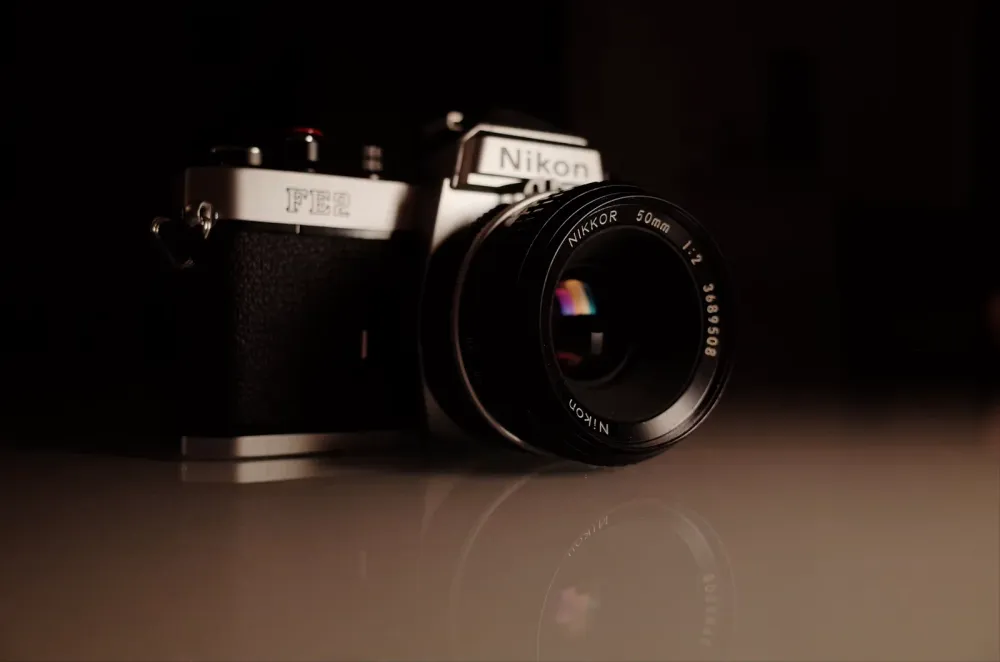
Every couple of years, a magazine declares that film photography is having a moment. For two decades those declarations were wishful thinking — a niche of hobbyists keeping a vintage practice alive against the tide. In 2026, the numbers say something has actually changed. Here's what the data shows, and what it means for the photos most people still take on phones.
What the receipts say
Pull the publicly-available numbers from 2024-2026:
- Polaroid Originals: 2024 holiday inventory sold out in 8 days. Annual sales doubled year-over-year for three straight years. The company hit profitability for the first time since relaunching in 2017.
- Kodak: film products generated roughly $400 million in 2025 — about 25% of total company revenue. Film capacity has been expanded twice in the last three years. The Rochester plant added a third shift.
- Fujifilm Instax: 13.8 million instant cameras sold in fiscal 2024-25. The Instax line outsells Fuji's entire digital camera division.
- TikTok: #filmphotography crossed 2.1 billion views in 2023. By June 2026 it's past 8 billion. Related tags (#filmcamera, #35mm, #disposablecamera, #polaroid) collectively cross 18 billion.
- Reddit: r/AnalogCommunity has more than tripled membership since 2022. Currently around 460,000 members.
Individual data points can be noise. This many data points moving the same direction is a signal.
Why now
Three things converged.
1. AI made digital photos suspect
Starting around 2022, AI-generated images became indistinguishable from photographs at first glance. Every digital photo on the internet now carries a small footnote: was this real?Film carries proof of the real built into its physical chemistry. You can't generate a film negative; it had to exist somewhere as a thing.
For people who care about authenticity — wedding photographers, journalists, fine art, anyone trying to convey I was there — film is the new way to say that loudly.
2. Gen Z found the look without finding the camera
Most of the people driving #filmphotography on TikTok have never shot a roll of actual film. They're using digital cameras with film emulation filters, or phone apps that simulate film stocks. The look is winning. The camera is incidental.
This is important: the film aesthetic now exists separately from film itself. You can have the visual signature without the chemistry. And once an aesthetic is decoupled from its original medium, it can spread much faster.
3. The economy of attention
Phone photos are infinite and weightless. Film photos are scarce and physical. In an economy where everything digital is essentially infinite, the scarce thing wins by default. A polaroid hanging on someone's fridge has more presence than 4,000 phone photos in someone's camera roll — because the polaroid took a decision to exist.
What this means for digital photos
Most people will not start shooting film. It's expensive ($1.50+ per shot), slow, requires labs, and produces unpredictable results. The film camera revival is real but it's a small minority.
What the rest do, increasingly, is process digital photos to look like film. The aesthetic borrowing is the broader trend. Adding a film border, a touch of grain, a warm color cast, a sprocket edge — these turn a phone photo into something with the visual signature of film, without the cost or commitment.
That's what tools like PixMojo's Film Border maker, Film Grain tool, and Disposable Camera effect exist to do. Not to replace film, but to give phone photos the same vocabulary the winning aesthetic uses.
The deeper read
Every time technology eliminates a limit, people find ways to add the limit back voluntarily. Digital eliminated film's constraint; people are now adding fake film grain. AI eliminated authorship; people now mark their work to prove it's real. The constraint is what gives the thing meaning.
The film aesthetic is winning because it puts a constraint back into the photo — a kind of this could not have been easily fakedsignal. That signal turns out to be worth something. The data says people will pay for it, search for it, hashtag it, and pay attention to photos that have it.
Add the border. Add the grain. Add the date. The aesthetic is winning for a reason.